Explore our library, where insights, press articles, and events are organized by tags, making it easy to find relevant topics.
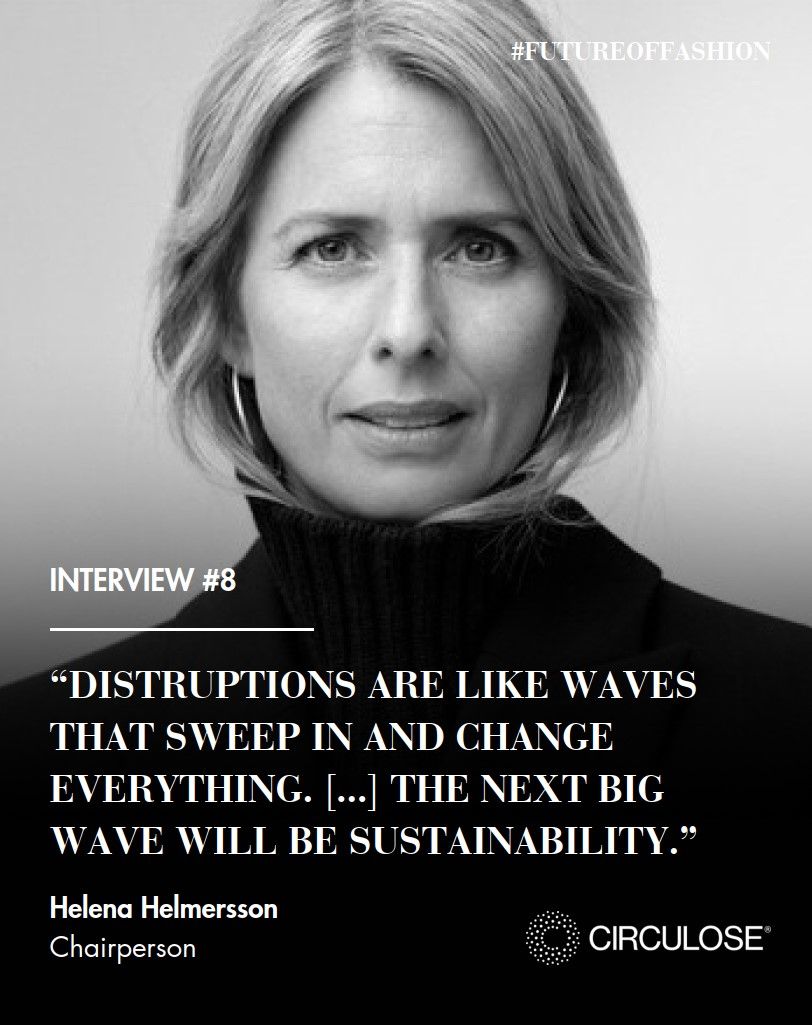
linkedin Interview #8 - Helena Helmersson; Chairperson Circulose
Why #Sustainability is the Next Wave of #Disruption in the #Fashion Industry During my recent visit to Stockholm, I had the pleasure of sitting down with Helena Helmersson for a thought-provoking conversation on the future of sustainability in fashion. Helena’s new role as Chairperson of Circulose, a leading Nordic recycling innovator, made this a natural focal point for our discussion.
event May 2024 Global Fashion Summit: Copenhagen Edition 2024
At Global Fashion Agenda Summit 2024 in Copenhagen Achim Berg was on Stage to discuss and share insights on scaling circularity in fashion and to discuss why luxury players hesitate to embrace #Rent #Resell and #Repair.
The theme of the summit, 'Unlocking the Next Level,' perfectly aligns with the need to move from commitment to action after 15 years of awareness creation.
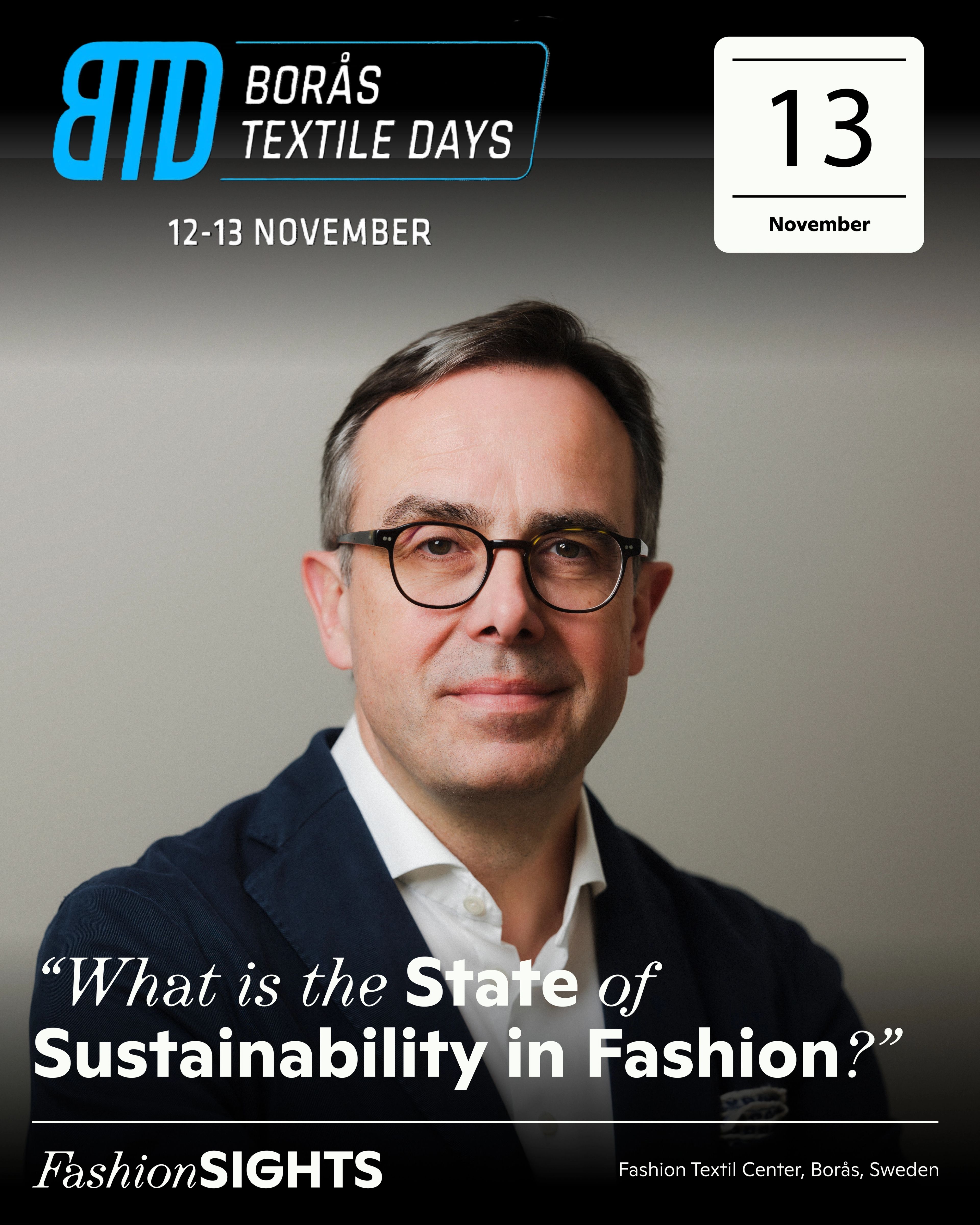
event November 2025 Borås Textile Days
At the 2025 Borås Textile Days in Sweden, Achim will deliver a keynote on sustainable and circular fashion business models and the Nordics’ role as a sustainability hub for the industry.
Despite early awareness of its environmental impact, fashion arrived late to actual sustainability commitments. Shifting to a circular economy is required for the industry to finally walk the talk.
We delved deeply into resale, exploring the challenges and opportunities of the secondhand market and how Sweden is uniquely positioned to be at the forefront of change. With a strong sustainability mindset, progressive regulation, modern resale concepts, pioneering companies and institutions such as theTextile Fashion Center, Sweden shows what’s possible when responsibility, innovation and research come together in fashion.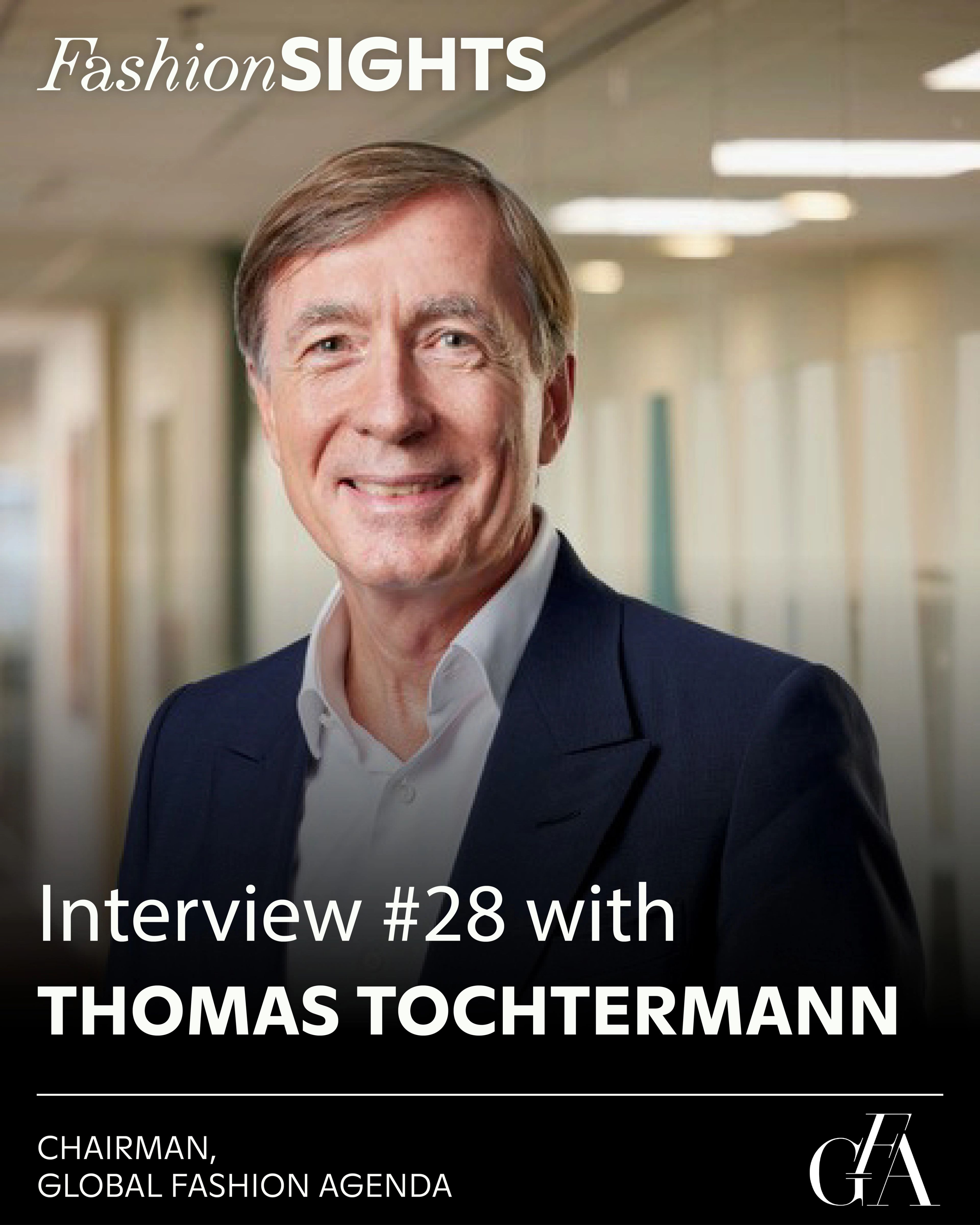
linkedin Interview #28 - Thomas Tochtermann, Chairman GFA
Why is sustainability taking a “peaceful pause” in fashion? This was the core theme of my recent conversation with Thomas Tochtermann, Chairman of the Global Fashion Agenda. Thomas is a passionate and influential voice for a more sustainable future in fashion. After a distinguished career at McKinsey & Company, he now serves as a board professional for various fashion and consumer companies. I’ve had the privilege of calling him a mentor during my McKinsey years, where he co-founded and championed the Apparel, Fashion & Luxury (AF&L) practice - and he’s remained a trusted friend ever since. In our discussion, we unpacked why sustainability in fashion appears to be facing more headwinds today than just three years ago. Why aren’t consumers willing to pay for sustainable choices? And why, despite all this, does Thomas remain hashtag#optimistic about the industry’s path to true sustainability? This thoughtful conversation is part of my ongoing interview series for my upcoming book on The Future of Fashion.
press June 2024 Op-Ed: Fashion Can’t Wait on Regulation to Act on Sustainabi...
businessoffashion.comIn his Op-Ed, Achim comments on the current state and progress of sustainability in the fashion industry and what regulation can do for it (or not).
Fashion's sustainability efforts have grown in importance, yet significant challenges remain as consumption, emissions, and pollution continue to rise. While many hope that regulation will drive change by forcing brands to deliver on climate commitments, there is concern that relying on slow-moving policies will further delay progress. Industry leaders, especially its “super winners,” must take responsibility and accelerate their sustainability initiatives, or risk being overtaken by more innovative competitors.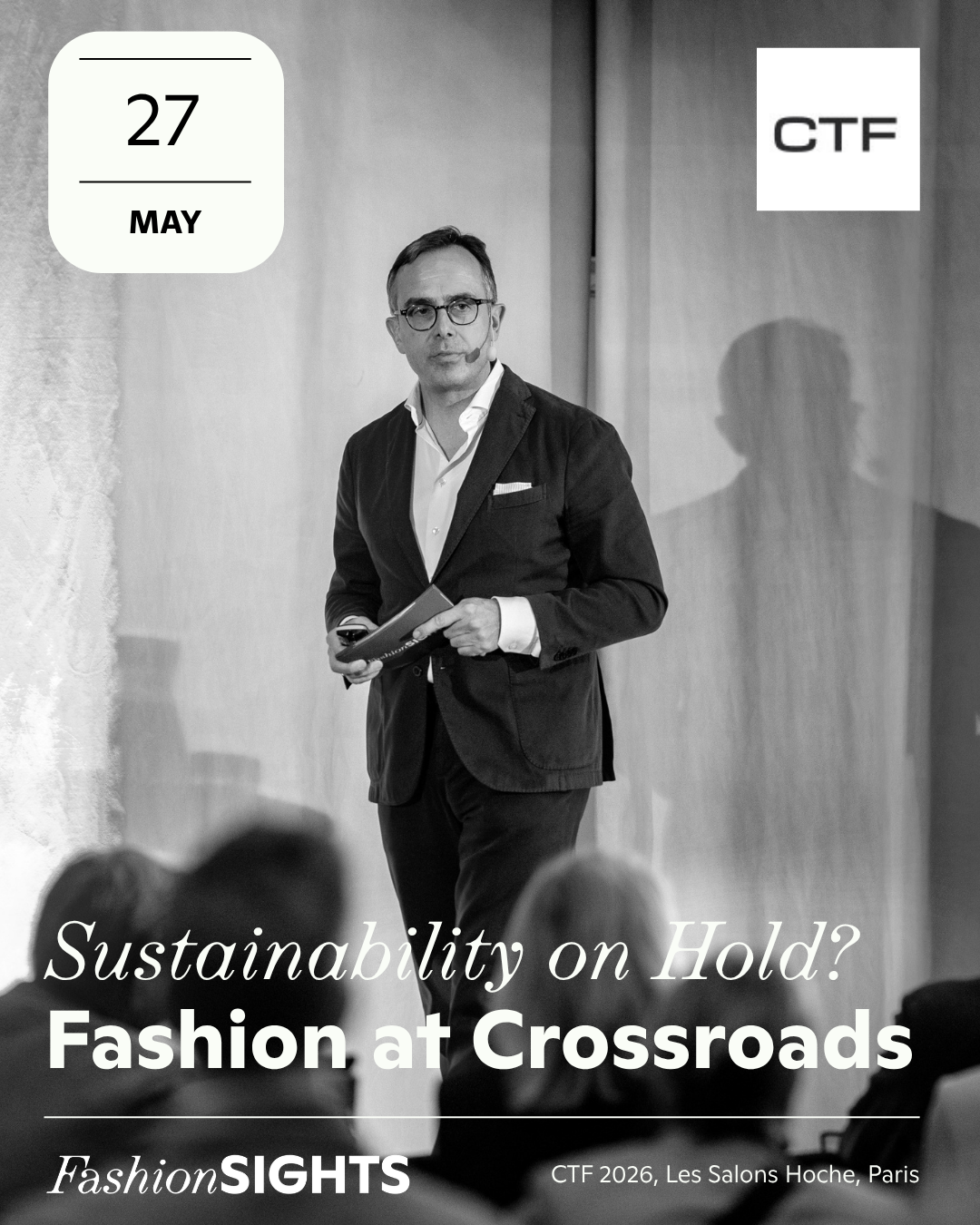
event May 2026 CTF - Challenge the Fabric
At CTF in Paris, Achim is invited as a speaker to explore how amidst industry pressures, sustainability has slipped down the priority list. The driving forces behind this development and what strategies it will take to bridge the gap between consumer values and purchasing decisions are among the central topics.
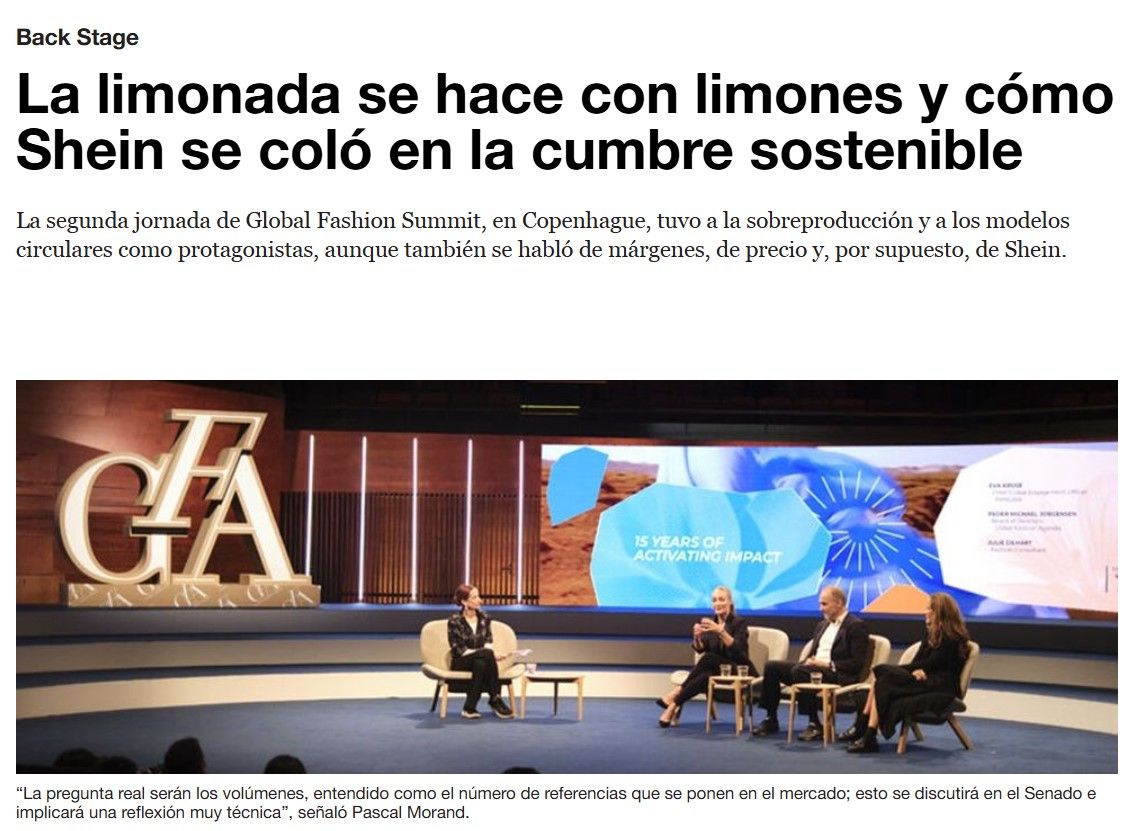
press May 2024 Lemonade is made with lemons and how Shein snuck into the Su...
Modeas.com by Pilar RiañoAchim speaks about circular business models, emphasizing the need to make these models more profitable in order to achieve sustainable growth.
The second day of the Global Fashion Summit in Copenhagen focused on sustainability, circular business models, and overproduction, with critiques of the fashion industry's current practices, including Shein's business model. Speakers emphasized the need for transformative change in the industry, highlighting circularity, creativity, and new regulations, while acknowledging challenges like reduced margins and increased complexity. The French government’s anti-Shein law, aimed at fast fashion regulation, and the call for companies to adapt to new market trends, were key topics discussed.linkedin February 2026 Why the fashion industry needs to innovate!
I had the pleasure of speaking at the 24h Circular Fashion Journey in Amsterdam, organized by GS1 Netherlands and WAIR Retail Geeks. Pressure on the industry is mounting from all sides: macro uncertainty, squeezed margins, rising ESG expectations, and rapid technological change. Yet meaningful innovation remains limited. Most business models are still being stretched, not rethought. In Amsterdam, we explored the structural forces reshaping fashion today and made a deep dive on four challenges in particular: · The end of deflationary sourcing and logistics marking a structural cost reset that permanently changes the margin equation · Accelerating ESG regulation pushing circularity from strategic option to license to operate · A lack of true, system-wide innovation with too much focus on front-end and, apart from a few exceptions, not enough reinvention of the back-end · Rapid industry polarization and fragmentation where scale winners pull ahead while the rest struggle to stay relevant We further identified six concrete action points for brands to stay competitive in this challenging environment: 1. Reach critical mass or commit to a niche 2. Take back-channel control 3. Protect margins with cost discipline 4. Integrate technology end-to-end 5. Transform for sustainability from claims to proof 6. Embrace flexibility as a core capability With GS1’s work on product identification and Digital Product Passports accelerating, the link between regulation, transparency, and competitiveness is becoming impossible to ignore. A big thank you to Bram Broeks, Mitch van Deursen and ★ Steven Witteveen for the invitation, and for bringing together so many inspiring individuals and brands like Steve Madden and PVH Corp. And, thanks to everyone who contributed to such open, forward-looking discussions.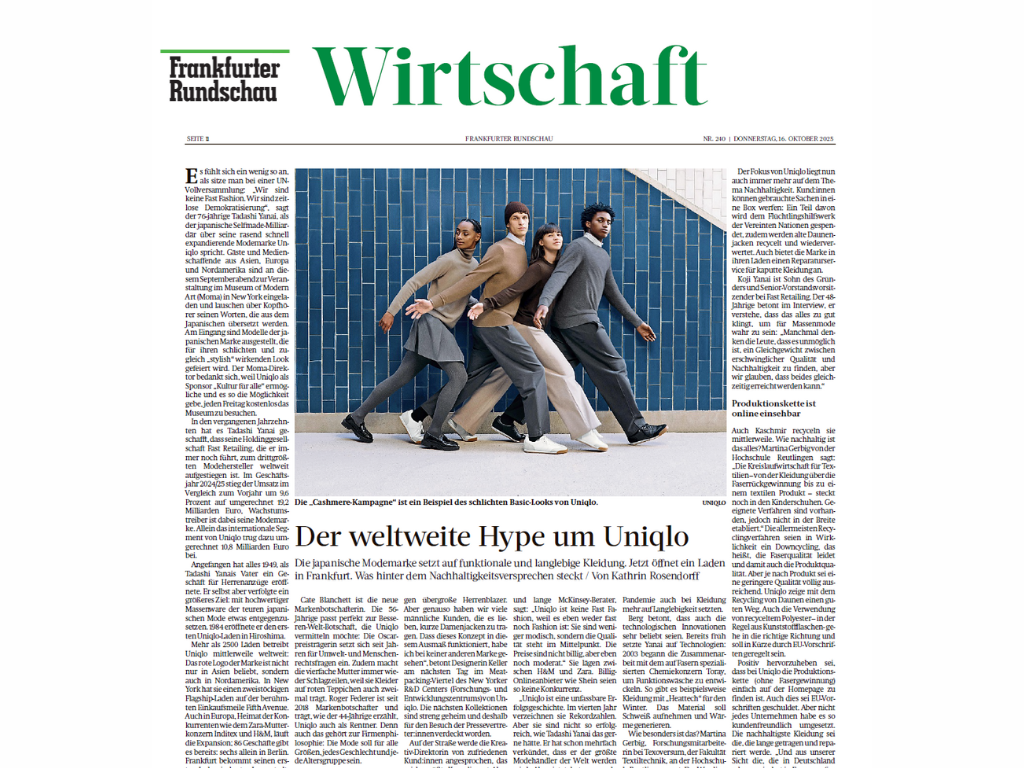
press October 2025 Uniqlo Lands in Frankfurt: The Global Hype About Uniqlo
Frankfurter Rundschau by Kathrin RosendorffAchim dissects Uniqlo’s success, positioning it as a considered alternative to the fast fashion paradigm.
As Uniqlo opens its 11th store in Germany, the article explores the brand’s positioning and growth drivers while critically examining its claims of democratization, quality, and sustainability. Achim notes that Uniqlo’s rise reflects a broader shift in consumer preferences toward longevity and quality, with its innovative, functional fabrics serving as a defining USP. Unlike its competitors, Uniqlo isn’t driven by rapid trend cycles or ultra-fast production; its focus on functionality, craftsmanship, and accessible yet moderate pricing sets it apart. Although he doubts that Uniqlo will overtake Inditex, Achim believes that Uniqlo is poised to challenge H&M amid its current slowdown.
Source: Frankfurter Rundschau
linkedin April 2026 Staying the course on sustainability is the hardest call in ...
That is a central topic I'll be exploring at Challenge the Fabric in Paris on May 27, 2026. Amid intensifying macro headwinds and mounting industry pressures, sustainability – a few years ago the industry's most ambitious agenda – has quietly slipped down the priority list. Progress has been made, but it remains limited; the momentum has stalled. Three forces are driving the retreat: Macroeconomic pressure: Inflation and squeezed margins are eroding both consumer confidence and corporate appetite for risk. The focus shifts to protecting near-term margins and profitability, rather than doubling down on sustainability. The attitude-behaviour gap: Consumer awareness of sustainability has never been higher. Yet willingness to pay remains stubbornly low. The gap between stated values and actual purchasing decisions continues to widen. A political and cultural shift: After years of regulatory momentum and ESG ambition, a conservative countermovement is gaining ground. Commitments are softening. Timelines are being quietly pushed back. And yet, the case for sustainability has not weakened. If anything, the current slowdown is sorting the committed from the opportunistic. When the soft industry recovers, it will be the brands that stayed the course – when no one was watching – that will have built strong, integral backbone. What will it take to walk the talk? And what strategies can finally bridge the gap?linkedin April 2026 My 3 Predictions on the Future of Fashion
A few weeks ago, I had the privilege of sitting down with Zalando co-founder David Schneider for a conversation as part of my upcoming book on the Future of Fashion. At the end, he turned the tables and asked me for my three predictions. Here they are , unfiltered: 1) #AI will make good players better — and expose the rest Across retail, platforms, and brands alike, AI is no longer optional. It drives sharper planning, faster execution, and true customer relevance. Those who still treat tech, data, and AI as a side project are already falling behind. 2) #ESG will be back: and this time it’s accountability, not ambition The gap between bold promises and operational reality is becoming visible. Customers, regulators, and investors will increasingly call out those who haven’t delivered. 3) Fashion has a #succession problem A generational leadership shift is underway — but much of the industry isn’t ready. This will trigger internal disruption and reshape competitive dynamics.linkedin April 2026 Has Nudie Jeans quietly built the most effective repair mode...
During a recent visit to Göteborg, I took a closer look at a brand that has been repairing jeans for nearly two decades. Long before circularity became a boardroom topic. What struck me: this is not a side initiative. It’s a system. What Nudie gets right: 1) Repairs as a core customer promise Free repairs on all garments, not as a marketuing campaign, but as a permanent service. This fundamentally shifts the relationship from transaction to lifetime value. 2) Convenience drives behavior Customers can access repairs easily: in stores, via dedicated repair shops, or through an international partner network. No friction, no excuses. 3) Repair as a gateway to circularity By keeping products in use longer, Nudie makes circularity tangible. Not through messaging, but through everyday customer experience. 4) Built-in incentives Trade-in options (with 10–20% credit) complement the repair model and keep customers engaged (”Creating tommorow’s vintage”), while feeding a second-life ecosystem. And the bigger players? Some have started: UNIQLO, Levi Strauss & Co., Patagonia. But often limited, complex, and not scaled. Repairs remain an add-on, not a backbone. Often more of a marketing effort than a serious step towards circularity. Nudie shows a different path: Make repair simple, accessible, and economically meaningful. So the question is: Why are repairs still not a standard offering across the industry? At least for premium and luxury items?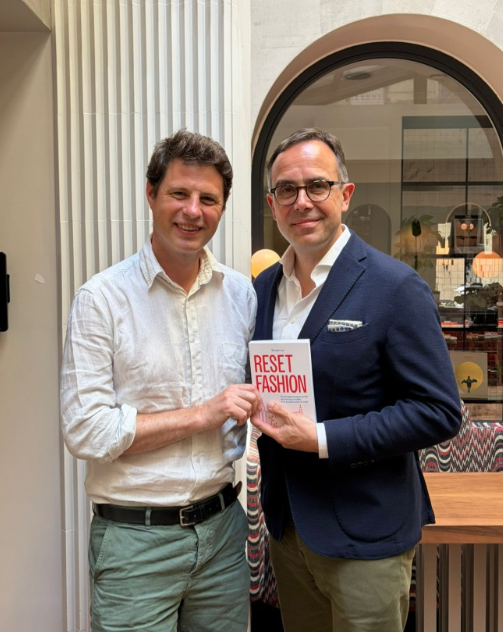
linkedin May 2026 Has Sustainability in fashion failed or has the industry jus...
Sustainable fashion needs more activism. It needs more funding and most of all, it needs acceleration. This week, I met my former McKinsey & Company colleague and Adore me co-founder, Romain Liot in Paris. He is an activist. He just published the book hashtag#ResetFashion with Reconaissance In Reset Fashion, Romain takes the reader inside the machinery of fashion to examine why so many well-intentioned sustainability efforts struggle once they meet economic and operational reality. Drawing on his entrepreneurial experience, from building one of the most successful fashion start-ups of the past decade, he offers a rare insider perspective on the real mechanics of change inside fashion companies: its cost structures, its organizational inertia or its supply-chain complexity. The book is worth a read! Get a copy ;-)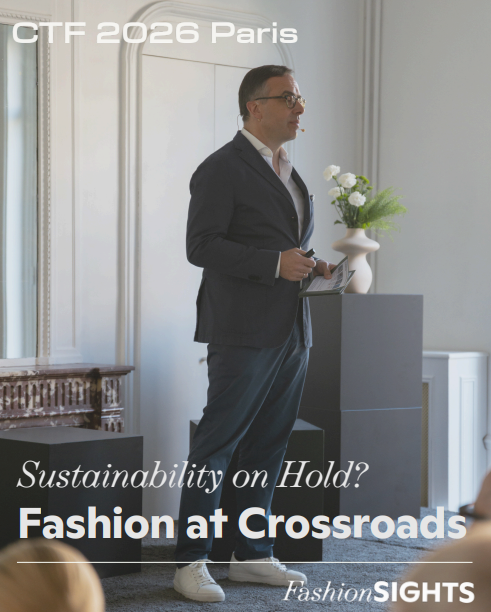
linkedin June 2026 Is sustainability in fashion on hold?
In my keynote at Challenge the Fabric 2026 in Paris, I shared my perspective on the crossroads that sustainability and luxury are facing today. Luxury is undoubtedly in a crisis. And sustainability is no longer primarily a question of awareness or commitment. Both are now a question of execution. Luxury should be leading the sustainability agenda. Given the prices consumers pay, the relatively low production volumes compared to the mass market, and the healthy margins many brands enjoy, expectations are highe, not only for better products, but for more sustainable ones. Materials and fabrics play a critical role in making that happen. And that is exactly what the annual Challenge the Fabric gathering is about. It was inspiring to exchange ideas with material and sourcing experts and to see that, while sustainability may have moved to the back burner in many organizations and progress is not accelerating, it is far from being on hold. The next chapter of fashion will not be shaped by purpose statements alone. It will be shaped by companies that can combine creativity, product innovation, sustainability, and commercial discipline - and translate them into measurable progress. A big thank you to the Challenge the Fabric team, especially Nina Elmersson and Malin Hagström, for bringing together the right people and for inviting me to speak. And thanks to Jennie Rosén and Ebba Asplind from the Swedish Fashion Council for the excellent organization. Thank you to Challenge the Fabric team around Nina Elmersson and Malin Hagström for bringing together the right people and for inviting me to speak. Thanks to Jennie Rosén and Ebba Asplind from the Swedish Fashion Council for the excellent organization.linkedin June 2026 The climate isn't waiting for fashion to adapt.
We're currently on our way to Sweden for our annual family vacation. While much of Europe is struggling with an intense heatwave, we're heading somewhere considerably cooler. That contrast got me thinking. According to climate scientists, this heatwave would have been virtually impossible without human-caused climate change. And it's no longer just a weather story. It's becoming a business story too. Europe is warming roughly twice as fast as the global average, and businesses are already beginning to adapt. Paris Fashion Week is shifting runway schedules to cooler parts of the day. Retailers are questioning autumn collections arriving even as temperatures exceed 30°C. H&M is redesigning theirs with lighter fabrics to prepare for longer, hotter summers. That's why one figure from TextilWirtschaft caught my attention. Germany's fashion retailers recorded their weakest June trading week despite having an additional selling day. Even discounts of up to 70% weren't enough to bring shoppers into stores. Only, online retailers somewhat benefited, but with a strong forcus on very summerly outfits, as our friend Made Lapuerta showcases on her insta channel hashtag#databutmakeitfashion. One industry, however, is already benefiting from this shift. Air conditioning is still relatively uncommon across much of Europe. But that's changing quickly. Markets that historically had little need for cooling infrastructure are suddenly investing in it. Retail is only one example. According to Allianz Trade's latest risk analysis, extreme heat could reduce GDP by 5–7% in Europe's most exposed economies by 2030. France is expected to be the hardest hit, followed by Italy, Germany, and Spain. Lower productivity, infrastructure challenges and rising operating costs are all part of the equation. And those numbers don't even capture the broader impact on farmers, vulnerable communities, the elderly, and wildlife. To me, this shows that climate change is no longer just a sustainability discussion. It is changing how consumers shop, how retailers plan assortments, how cities operate and where companies invest. The winners won't necessarily be those with the best products, but those that adapt the fastest. The retail calendar was built around predictable seasons. The climate is no longer playing by those rules. Maybe it's time retail stopped doing so, too. What do you think? Sources: TextilWirtschaft, CNN, Reuters, WWD, Vogue, Fortune, Allianz Trade, databutmakeitfashion


