Explore our library, where insights, press articles, and events are organized by tags, making it easy to find relevant topics.
press March 2025 What luxury can learn from the watch resale playbook
Vogue Business by Milena LazazzeraAchim shares his opinion on the opportunities and challenges of resale in fashion and luxury.
Resale has become a major force in luxury, with watches leading the way due to limited supply, durability, and high value retention. Their scarcity fuels demand and strengthens strong resale prices. Fashion faces greater challenges in resale, as items like cashmere and shoes degrade over time, and the industry often overproduces rather than limiting supply, reducing long-term value. As Achim notes, this makes resale more complex, requiring a careful approach. Many brands still underestimate consumer demand or struggle to integrate resale into their business. A key lesson from watches is the importance of authentication and collaboration with trusted resale platforms to protect brand equity and unlock new opportunities in the secondary market.
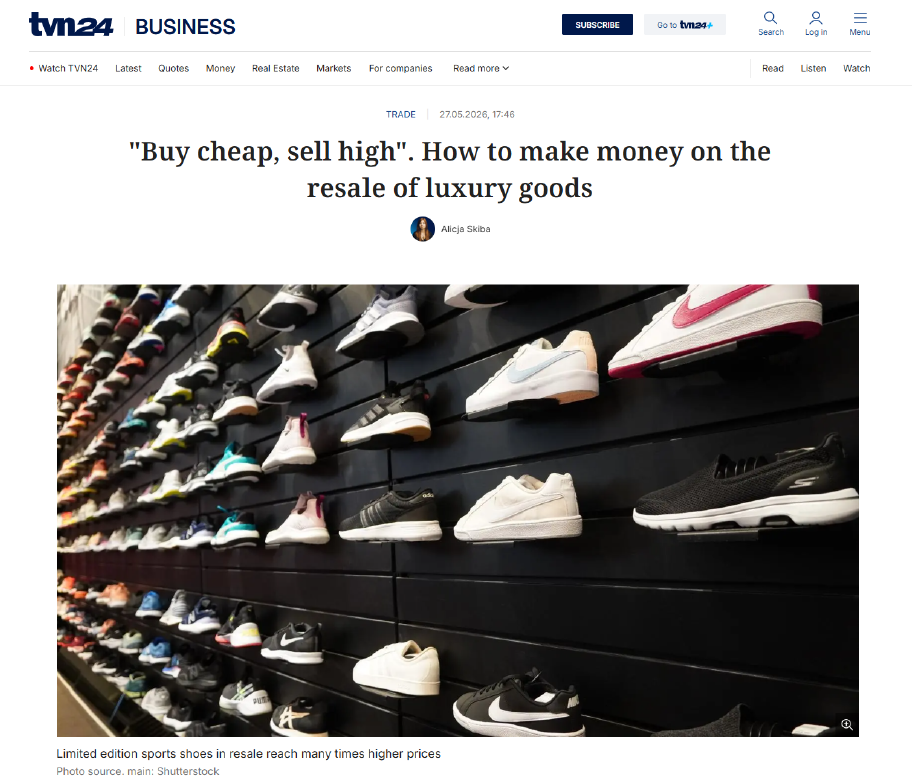
press May 2026 "Buy Cheap, Sell High." How to Make Money on the Resale of L...
TVN24 Business by Alicja SkibaAchim on why the resale market has moved from niche trend to permanent fixture of the luxury economy.
What began as niche sneaker flipping has quietly grown into a multi-hundred-billion-dollar industry. Achim contextualizes the shift: the secondary market gained momentum in the mid-2000s with online platforms, but the pandemic was the true accelerator — drawing millions of new participants driven by financial incentive and social media influence. He notes that today's resale buyer is motivated not only by status but increasingly by cultural belonging and investment logic, with limited-edition items treated as appreciating assets rather than consumer goods. Inflation and rising living costs have since given the market a second wave of momentum. His conclusion is unambiguous: resale is here to stay.
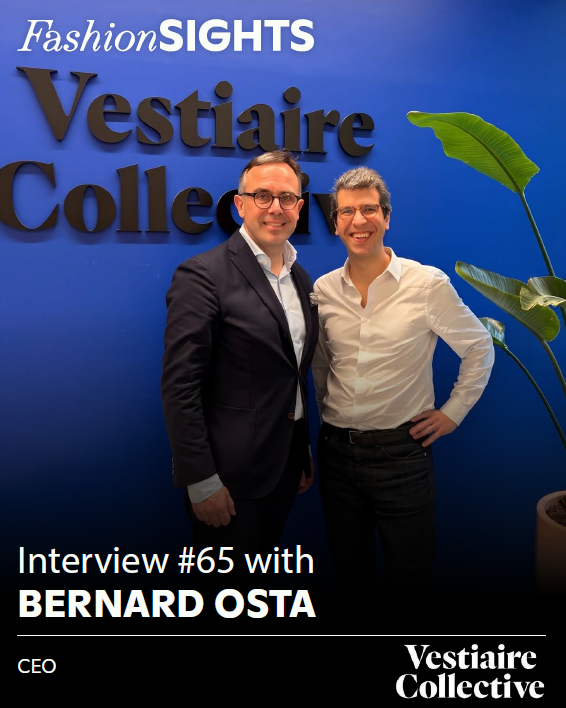
linkedin May 2026 Interview #65 - Bernard Osta; CEO, Vestiaire Collective
Resale has moved mainstream … and full-price fashion will feel the impact For my upcoming book, which will be published in early 2027, I spoke with Bernard Osta, CEO of Vestiaire Collective, about the evolution of resale - from niche behavior to a structural force in fashion. What became clear: It is about access. It is about value. It is about changing consumer habits. It is about sustainability It is about brands learning that the second sale matters too. The category has had its reality check. After the e-commerce boom during COVID, expectations were high. Maybe too high? Since 2022, many players had to refocus, restructure, and prove their economics. But the strongest platforms are now entering a new phase. They turn profitable. Bernard pointed to three shifts that will define what comes next: 1) Younger consumers do not separate first-hand and second-hand the way previous generations did. 2) Brands can no longer afford to watch resale from the sidelines. 3) And AI could become a major accelerator, making listing easier, discovery smarter, and authentication faster. The takeaway that stayed with me: The future of resale will not be decided by whether demand exists. It will be decided by EXECUTION. Thank you, Bernard, for taking the time and sharing such a clear perspective on one of fashion’s most exciting growth spaces.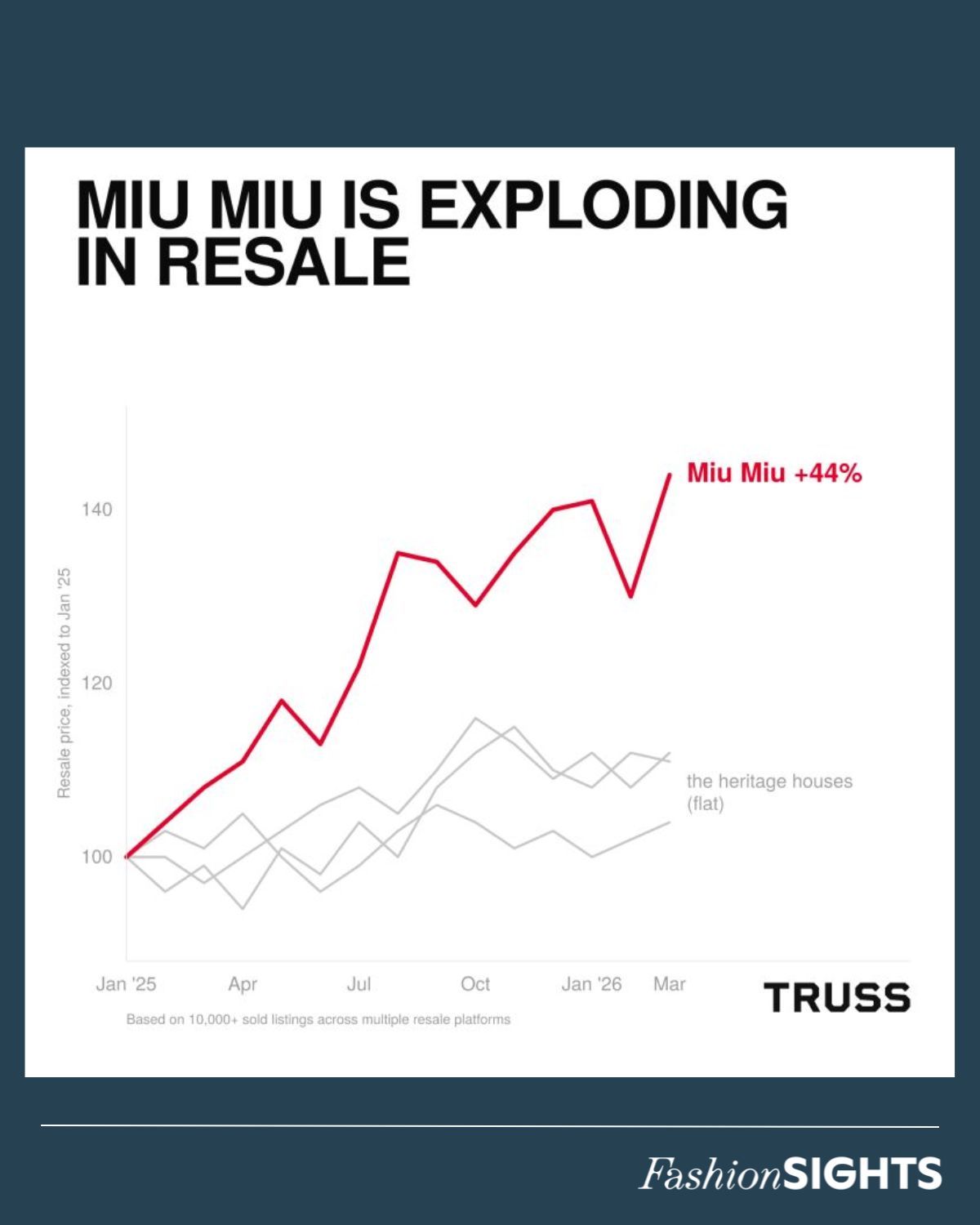
linkedin July 2026 Miu Miu’s Resale Rise – strength signal or hype aftermath?
The latest TRUSS analysis shows Miu Miu’s resale prices climbing while many heritage luxury houses remain flat. More than 30 years after its launch, the brand has moved far beyond being Prada’s "little sister” and became one of luxury’s most talked-about names – at a time when many established players were struggling. It topped the Lyst Index for the first time in Q3 2023 and stayed near the top until recently, ranking #4 in Q1 2026. While heritage brands are now reclaiming the Lyst rankings, the resale market tells a different story. Indexed to January 2025, Miu Miu’s resale prices continue to outperform. For the second time, Miu Miu is moving against the tide – this time on the secondhand market. Most interestingly, this is driven purely by supply and demand, without any marketing. So, what is actually driving this phenomenon? At first glance, this looks like another proof point for Miu Miu’s exceptional brand heat. Miu Miu built desirability through standout products, cultural relevance, and a strong community. Entry-level pieces like bag charms and initiatives such as the Literary Club resonated with Gen Z, a generation that is also highly engaged in resale. But the resale market may also tell a more ambiguous story. Yes, Miu Miu’s secondhand prices are outperforming. But rising resale demand could also signal that the brand has become more mainstream: the hip early adopters who bought into Miu Miu at the height of its momentum, may now be moving on to the next it-brand, while those who could not, or would not, buy at full price are entering through secondhand. In that sense, resale strength is not automatically the same as long-term brand strength. Many assumed the Miu Miu phenomenon would be rather short-lived. Could the numbers reflect more durable desirability? Or is it just the afterglow of a trend that is starting to move on? Thank you TRUSS and Woody Lello for the insightful analysis. Source & Visual: TRUSS Analysis: FashionSIGHTS